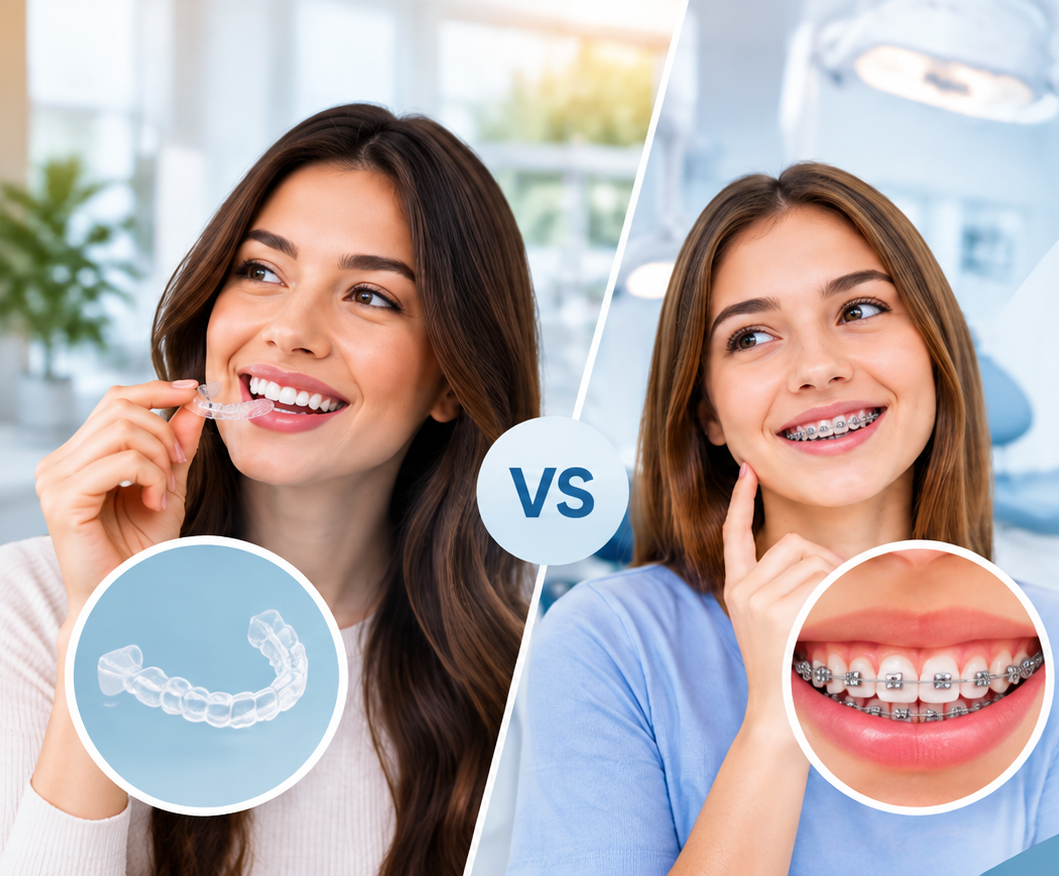
Want straighter teeth but unsure whether to choose Invisalign or traditional braces? You are not alone! Both treatments can gradually move teeth into better positions, improve your bite, and create a healthier-looking smile. The difference lies in how they work and what daily life looks like during treatment. Read the entire blog to know their …

Want straighter teeth but unsure whether to choose Invisalign or traditional braces? You are not alone! Both treatments can gradually move teeth into better positions, improve your bite, and create a healthier-looking smile. The difference lies in how they work and what daily life looks like during treatment. Read the entire blog to know their features and make the decision-making process less confusing. Moreover, discuss the most suitable option with the best orthodontics dental clinic in Mahim!
1) Consider How They Look
Traditional braces use brackets and wires attached to the teeth, making them clearly visible during treatment. Invisalign uses a series of clear, removable aligners designed to fit over the teeth more discreetly. For people who prefer their orthodontic treatment to be less noticeable, clear aligners may feel more comfortable in social or professional settings. However, appearance is only one consideration. The complexity of the dental problem and the orthodontist’s recommendation should also guide the decision.
2) Think About Your Daily Routine
Your lifestyle can influence which option feels easier to manage. Invisalign aligners can be removed while eating and drinking, allowing you to maintain your usual diet and brush and floss normally. Braces remain fixed throughout treatment, so certain hard, sticky, or chewy foods may need to be avoided. Invisalign also requires consistent wear, usually around 20 to 22 hours a day, for the treatment to work as planned. Your ability to follow this routine matters.
3) Understand Cleaning And Care
Oral hygiene is important with both treatments, but the routine is different. Braces require careful brushing around brackets and wires because food particles can become trapped. With Invisalign, you remove the aligners before eating and clean both your teeth and aligners regularly. Neither option eliminates the need for good dental hygiene. Regular brushing, flossing, and professional dental care remain important throughout orthodontic treatment to help maintain healthy teeth and gums.
4) Consider Your Orthodontic Needs
Not every orthodontic problem can be treated in exactly the same way. Invisalign can address many cases involving crooked teeth, spacing, and certain bite concerns, while braces remain a versatile option for a wide range of complex tooth and bite movements. The appropriate treatment depends on factors such as tooth position, bite, jaw development, and overall oral health. An orthodontic assessment is therefore essential before deciding between aligners and braces.
5) Discuss Your Options With An Orthodontist
There is no single treatment that suits everyone. During a consultation, an orthodontist can examine your teeth, understand your concerns, assess your treatment needs, and explain the expected duration, care requirements, and possible results of each option. If you are considering treatment, an orthodontics dental clinic in Mahim can help you understand whether Invisalign, braces, or another approach is appropriate for your individual needs.
In Conclusion
Choosing between Invisalign and braces is about more than deciding between clear aligners and metal brackets. Your orthodontic needs, lifestyle, commitment, oral hygiene habits, and treatment goals all matter. Both options can be effective when appropriately planned and followed. Rather than choosing based only on appearance, discuss your concerns with an orthodontist and understand what each treatment involves. The right choice is ultimately the one that suits your dental needs and daily routine.
Looking for expert dental care in Mumbai? Connect with ToothWorks and book your visit today!

Toothworks
Dr Shruti is the Head Dentist and Boss at ToothWorks Dental Clinic in Mahim. She specialises in replacing missing teeth, total oral rehabilitation, bite & jaw issues and cosmetic dentistry.